What a Three-Day Wedding Weekend Actually Looks Like, Hour by Hour
By Andra & Marius Dragan
Most timelines you’ll find online are for a single wedding day in the country you live in. A destination wedding is a different animal. People fly in, stay for days, and the wedding is one part of a longer thing.
We photograph three days of it, and we’ve done that in more than forty countries. Here’s what the hours actually look like, and the one decision that matters more than any of them.
First, the rule that beats the whole schedule
Never put the wedding the day after the biggest party.
This is the single most common mistake we see, and it has nothing to do with photography. Everyone arrives excited. The first night turns into a proper night. And then the wedding — the day they spent a year or two planning — happens to people who are running on four hours of sleep.
If your guests are staying a week, put the wedding on day four or five. By then everyone has arrived, met each other, slept, adjusted, and settled into the place. Day six is possible but leaves almost nothing afterwards. Day one or two is the version people regret.
We photographed a wedding in the Austrian Alps where the couple understood this better than anyone. The day before, everyone hiked into the mountains for nearly three hours, in the rain. At dinner afterwards, the couple stood up and said, roughly: two drinks are on us, and after that you’re buying your own. They told us later it was never about the money. They just knew that if they let people run, nobody would be any good the next day.Plenty of guests stayed and drank anyway, and that’s fine — the point is that the couple had thought about it.
Day one: the welcome dinner
Start time: usually between 18:00 and 20:00. Length: about three hours.
The hour depends on where you are and how the light works there. On a hot beach destination it starts later. We shot one near Boston where it got dark early, so dinner started at 18:00. It’s an evening event either way.
Three hours is the right length, and most couples land there naturally. It’s long enough for people who have never met to actually meet, and short enough that everyone sleeps.
If you’re doing a real ceremony rehearsal rather than just a dinner, it’s usually during the day. The smart couples run it at the exact hour the ceremony will happen the next day, so they can see where the sun will be and what it will feel like. If you do nothing else with your rehearsal, do that.
About guests arriving on time: at destination weddings they’re punctual, and often early. They have nowhere else to be, and they came for this. At a wedding in your own city, expect people to trickle in over about half an
hour. There are countries where everyone runs late as a rule, but those weddings tend to be single-day affairs anyway.
The activity day
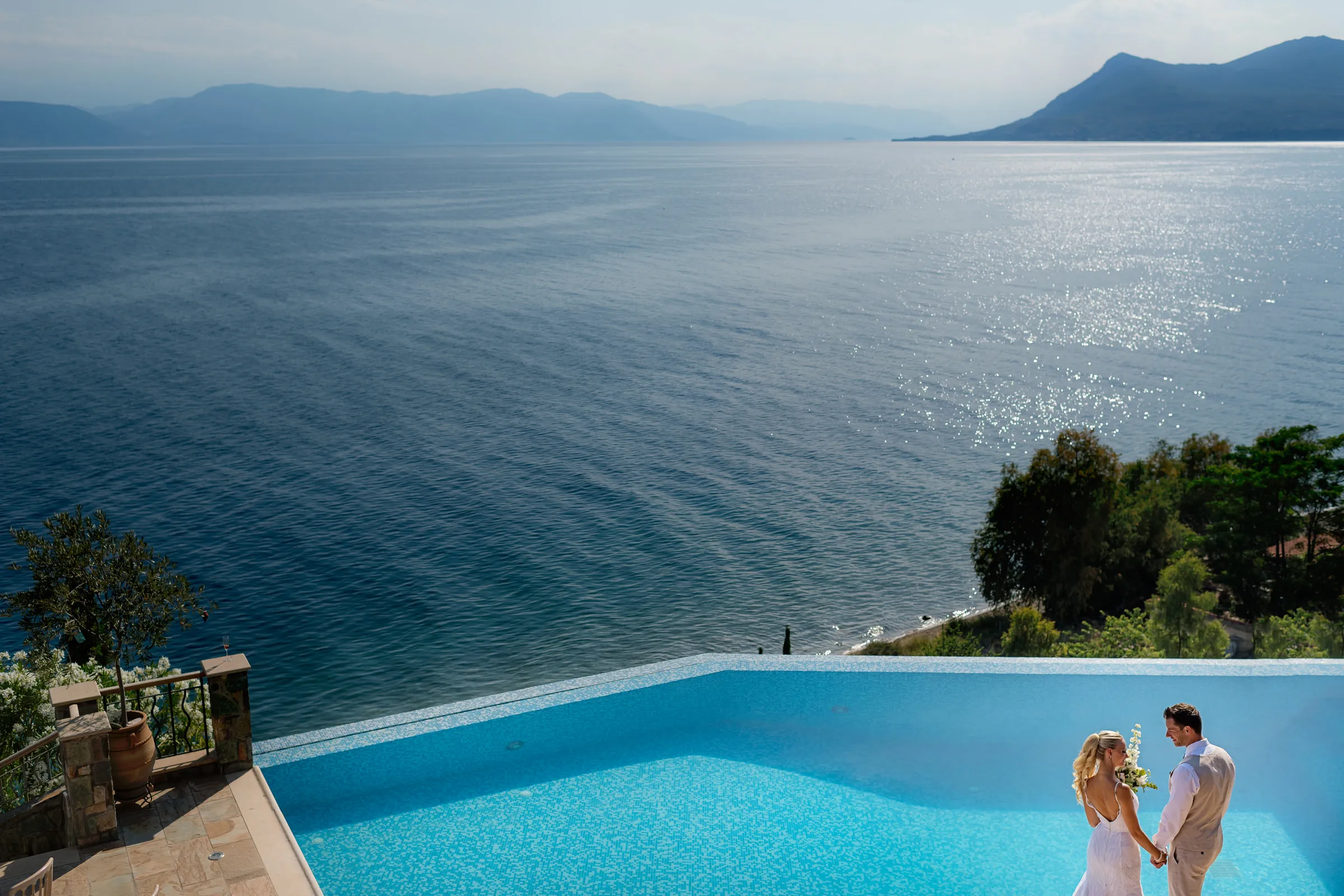
If there’s a day of activities instead of, or alongside, dinner, the range is enormous. We’ve photographed a day that started at 07:00 and finished at 19:00 — bicycles, ATVs, and a visit to the pyramids, all in one go. At a wedding in Greece it was island hopping across four islands.
There’s something worth understanding about your guests here. People who fly across the world to be at your wedding arrive wanting to celebrate. The thought in their head is roughly I came all this way, I’m going to enjoy this. That’s very different from a wedding at home, where guests often turn up tired from the week, at their fourth or fifth wedding of the year, feeling the cost of all of it.
That energy is a gift. Just don’t spend it the night before.
The wedding day, hour by hour
The hours below assume the sun sets at 20:30, which is roughly a Mediterranean summer. Move everything with your own sunset time and the shape holds.
Getting ready starts four to five hours before the ceremony. That sounds like a lot until you see the room: it’s usually full of women, all going through the same makeup artist and the same hairstylist, taking turns. Nobody wants to feel rushed. There’s usually a platter from the kitchen, fruit and cheese, a glass of prosecco. It’s one of the nicest parts of the day and it shouldn’t be compressed.
We’re there from the beginning, but we don’t shoot before-and-after portraits of the makeup, even though the artists usually do beautiful work. We start wide — the room, the dress, the jewellery, whatever is happening in the corners, reflections, whoever is laughing at what. As the preparations get closer to finished, we move in: the details on the makeup, the eyes, the hair. The close work comes last, not first.
The ceremony should start 60 to 90 minutes before sunset. Sixty is ideal. And it should not run late — every minute you lose comes out of the best light of the day.
The ceremony itself is short. A few minutes at the fastest, thirty at the outside, and around twenty is typical.
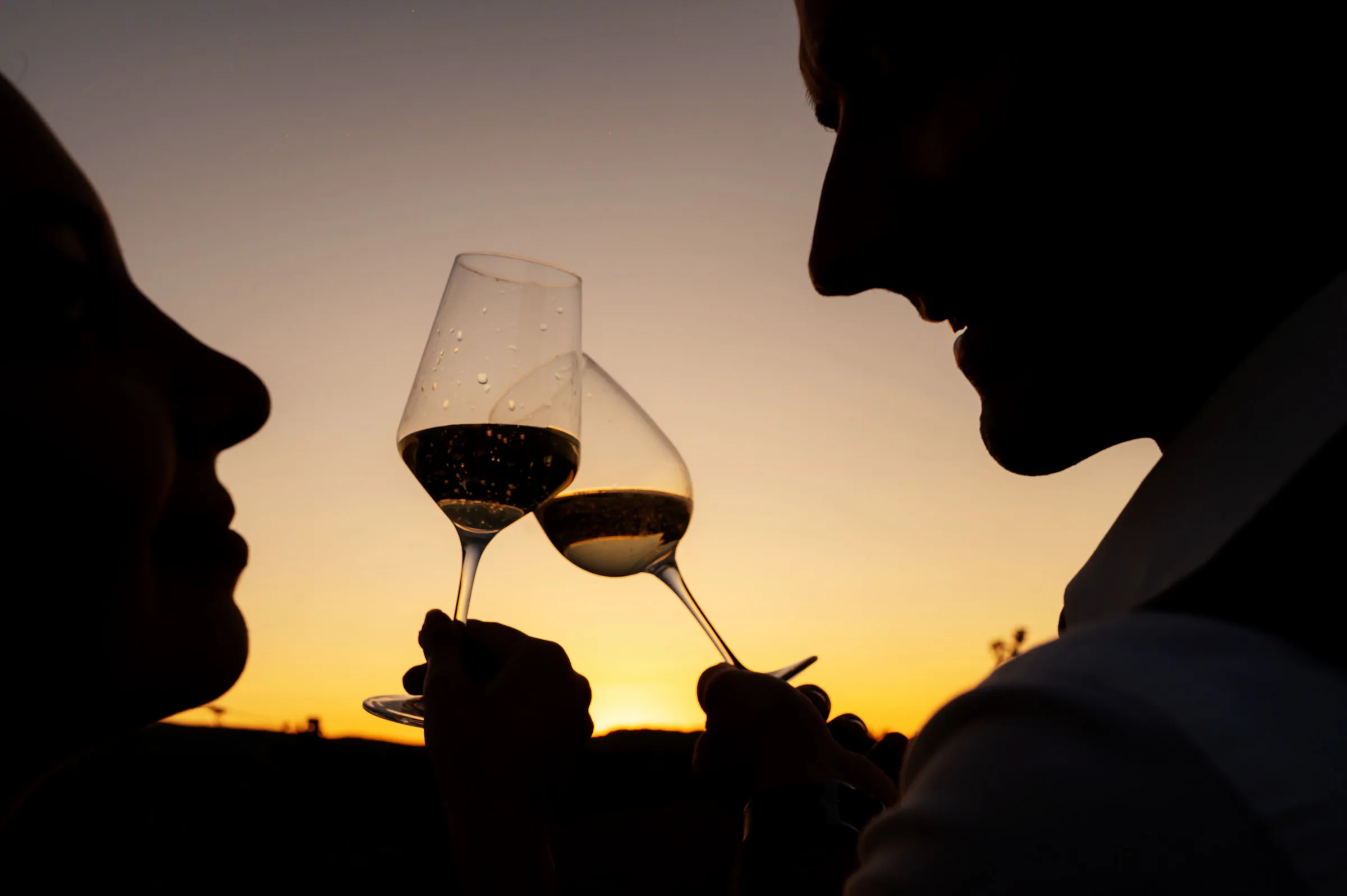
The cocktail hour is roughly thirty minutes before sunset and thirty after. This is the window where everything visual happens, and it needs to be handled carefully.
Group photographs: we do them while everyone is still in one place. One large group, then each family, then whoever else matters. Five to ten minutes, no more. We push for these, and we’ll say so honestly: they’re the photographs that gain value with time. In twenty years, some of the people standing in that frame won’t be there anymore. That’s not a comfortable thing to say at a wedding, but it’s why the pictures matter.
The couple: you should not be away from your own party for more than ten minutes at a time. An hour or two away is an hour or two of your own wedding that you never get to attend, and your guests feel it too.
If you want more couple photographs than ten minutes allows, the answer isn’t a longer session. It’s several short ones. Ten minutes here, ten minutes later, ten minutes at sunset. You get different light and different locations out of it, and your guests never feel your absence.
Honestly, whether you end up with twenty photographs of the two of you or two hundred makes very little difference to your life. What you were doing while they were taken makes all of it.
We do like a few minutes at sunset, and we’ll ask. But if something better is happening, or if the moment matters more to you than the light, we drop it.
Guests sit down one to two hours after the ceremony ends, depending on how long you want the cocktail to run. Our advice is to keep it tight. People have been outdoors, it’s usually hot, and they’ve been drinking on an empty stomach. Hungry guests in the heat get irritable, and no photograph fixes that.
Food should arrive quickly once people sit. A well-organized dinner doesn’t leak time. The speeches go between courses: people eat, someone speaks, the next course arrives, someone else speaks. Interleaved, so there’s never too much of either.
The day after
Breakfast: most people don’t come. Whoever does turns up after 10:00, usually between 10:00 and 11:00, and it depends entirely on what time the wedding ended.
We’re there with a camera anyway, and it’s worth it. The night before, everyone was immaculate. The morning after there are sunglasses and tired faces and people laughing at each other across the table. We shoot wide there— no close details, no portraits — and these are consistently among the funniest and most honest frames of the whole weekend.
The rest of the day is usually the pool, or the sea, and people telling each other what they remember. Some couples organize something: zip lines, rope bridges in the jungle, ATVs. If your crowd is young and up for it, it works beautifully. If not, don’t force it. Nobody has ever complained about a slow day by the water.
The mistake that isn’t about timing at all
We’ve heard it more than once, on the morning of the wedding: I’m so tired, I just want this to be over.
It’s frustrating to hear, because those people usually spent a year or two building the day they’re now trying to survive. And afterwards, almost every time, it turns into the other sentence: it was so beautiful, I’m sorry I didn’t enjoy it more, it went too fast.
So the last piece of scheduling advice we have isn’t about hours. Don’t spend the day trying to please everyone.Be the way you actually are. If you dance, your wedding dances — guests read what you want from how you behave, and they follow it. If you spend the evening sitting and talking, that’s the wedding you’ll have.
You’re not attending your wedding. You’re leading it.